Busting some myths about animal-assisted therapy
You’d be forgiven for thinking animal-assisted therapy is playing with puppies.
Because, at first glance, what we do looks like pure fun.
And, on one hand, it is! The magic of animal-assisted therapy is that it supports clients to connect with their therapist through the calming influence of our therapy dogs.
But there’s so much more than meets the eye. So let’s get into some mythbusting.
Myth: We train dogs.
Fact: Our dogs are trained therapy dogs but we don’t train dogs for other people! Our allied health professionals are handlers who have their own therapy dogs to support our work in Paw Pause.
If you’re looking for a reputable trainer to work on general behaviour and obedience for your own dog, try your local council or vet for classes and advice.
If you are considering obtaining a therapy dog for your family, find more information from Guide Dogs Australia https://guidedogs.com.au/vision-services/dog-services/therapy-dogs/
Myth: We’re going to play fetch.
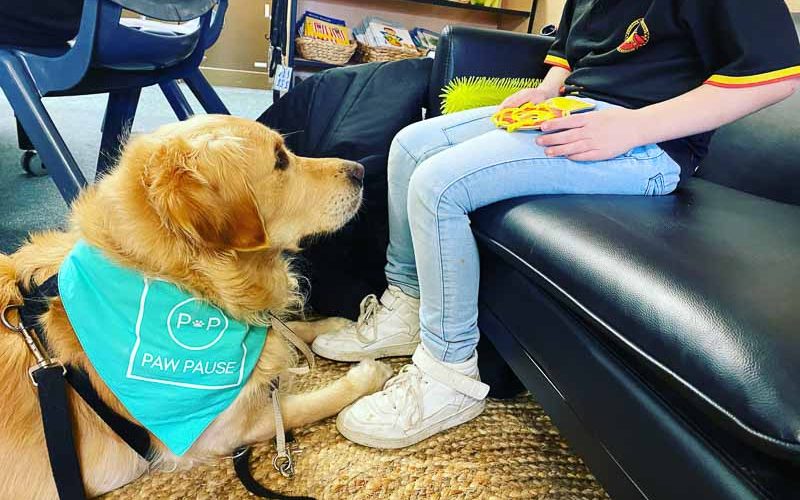
Fact: Paw Pause isn’t about playing with puppies. Our trained therapy dogs are always on the lead and under complete control of the handler, who is an allied health professional. There’s no playing games, throwing the ball or sharing treats with the dog.
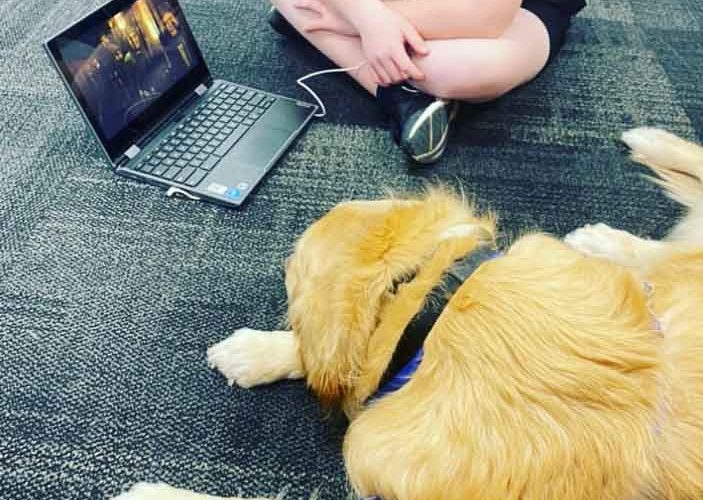
Instead, our dogs provide a calming presence in the classroom or in the school – wherever we’re needed – so that students can get all the benefits of working with a Paw Pause team. That’s reduced anxiety, creating new positive associations around school, improved behaviour and self-regulation and enhanced social skills, to name a few.
Myth: My school already has a school therapy dog so we can’t have a Paw Pause team.
Fact: Paw Pause teams work in harmony in any school community, regardless of whether you have a full-time/part-time dog on site or occasional visiting dog. The Paw Pause difference is our allied-health professional handlers and trained therapy dogs – the team delivers therapy and support wherever we are needed.
Realistically, a single school dog can’t be everywhere at once and if their handler is a member of leadership or teacher, it also takes that person out of their regular role and into the handler role.
By bringing in a Paw Pause team, we can work with your individual students who are NDIS participants, or with small groups of students or a bigger cohort as you need us. We come in for three hours, once a week for a term at a time providing targeted support when and where your school needs it with no impact on your staff.
Myth: We tried a school dog and it didn’t work out for us so Paw Pause won’t work.
Fact: There can be lots of reasons why a full time school dog isn’t the right choice for a school.
That’s why the trained Paw Pause teams are a great alternative for your school. Our professional teams can come in and work when and where we are needed. That means your school doesn’t need to worry about the ongoing training and financial expense of having your own dog – think vet bills, food, insurance and ongoing care of a dog.
Paw Pause teams have their own insurance and our handlers own their own therapy dogs so not only do they know their dogs inside out, we take care of everything.
That means you get all the benefits of an allied health professional and trained therapy dog to work with your students with none of the hassle.
Myth: This will add to our teachers’ workloads.
Fact: The ultimate goal of Paw Pause is to be a seamless benefit to your school community. We don’t need direction from teachers – we fit in with you and, to the untrained eye, we look like a School Support Officer – with a dog! – providing calming, behaviour-regulating support to students who need it.
Your teachers don’t need to do anything to prepare for us, direct us in the classroom or follow up with us. Simply tell us the students who need us, and we’ll get on with the work of supporting them to be their best selves at school, helped ably by our trained therapy dogs.
Heading: Paw Pause is unique
Paw Pause is truly different to what you might be thinking of when you think about dogs in schools.
Our dogs don’t behave like your average dog, because they’re not. And our handlers bring all the experience of their qualification, whether it’s psychologist, occupational therapist, social worker or counsellor, as well as their empathy and lived experience to the sessions.
Together, we’re all about working towards that common goal – supporting your students to thrive at school.